
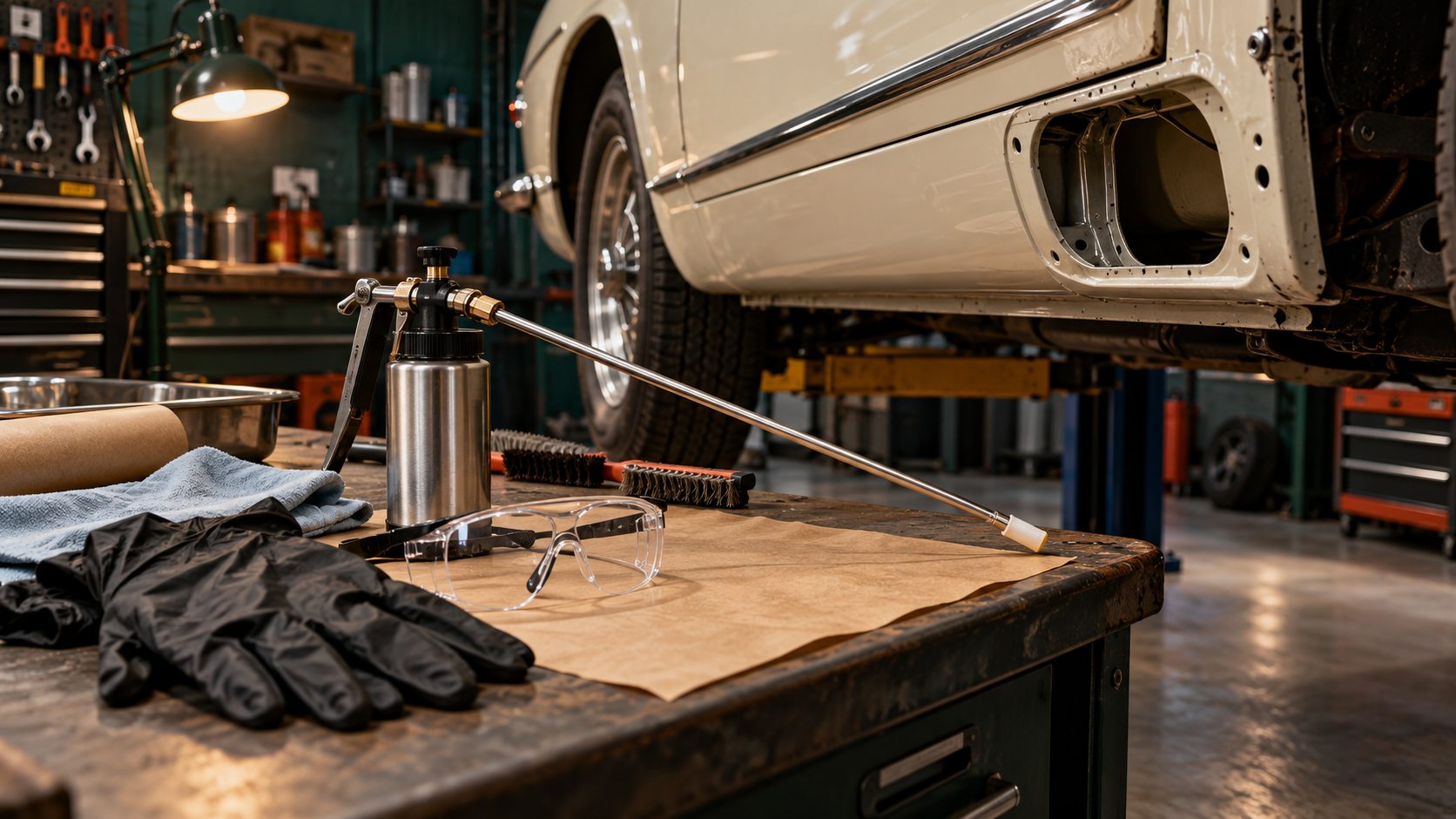
Cavity wax is a treatment category for enclosed vehicle sections. Bilt Hamber describes Dynax-S50 as a wax for cavities and voids. Hammerite lists doors, sills and chassis among Waxoyl applications. These maker descriptions do not establish suitability for every vehicle.
Check before choosing
- Identify the section and existing coating.
- Ask a marque specialist about approved access points.
- Check compatibility, preparation and application equipment in the exact product instructions.
- Obtain the current safety data sheet for the formulation and pack.
A lance reaching a cavity does not prove complete coverage. Ask an applicator how the section will be inspected and recorded. Do not drill access holes without vehicle-specific advice.
| Ask a workshop | Why it matters |
|---|---|
| What condition is the metal in? | A coating is not structural repair |
| Which exact product will you use? | A brand contains different formulations |
| How are drains and excluded parts protected? | Access and masking are vehicle-specific |
| When should it be inspected again? | Hidden areas still need monitoring |
Use the manufacturer's safety downloads rather than a sheet for another product. DINITROL provides a technical and safety document library; Hammerite includes safety information on its product page.
For exposed sections, see underbody protection.
Sources
Sources & checks
Checked 2026-10-25. Read the original instructions before acting.